Kayaking with whales

A week on from my kayaking trip from Pasagshak Bay and the excitement hasn’t even started to fade. I don’t think it’s going to. Jen from Kayak Kodiak was kind enough to drive out to Pasagshak to run a one-person whale-searching tour and we pushed off from the beach into a grey bay with strong winds and rain forecast.

It wasn’t long before we spotted distant blows out beyond the bay. We pushed on, chatting and searching the shoreline for wildlife. As promised, the wind arrived suddenly, a line of ruffled water advancing towards us, and I had to turn to shout to Jen behind me to be heard. Further out and more exposed now, the sea picked up too, the bow of the kayaking lifting and dipping with the waves.

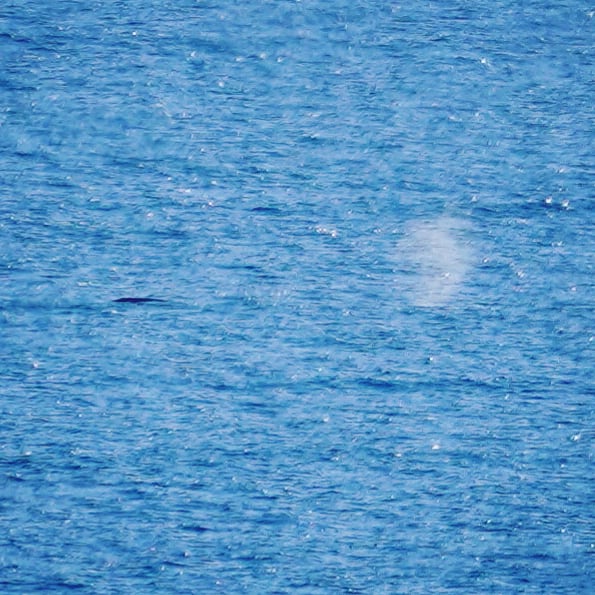
We paddled on keeping our eyes on the blows when all of a sudden there was a blow much closer to us. We were almost there. Barely a few minutes later, the hollow whoosh of a whale’s breath was audible over the wind, then another! After half an hour of paddling we were with two gray whales inside Pasagshak Bay.
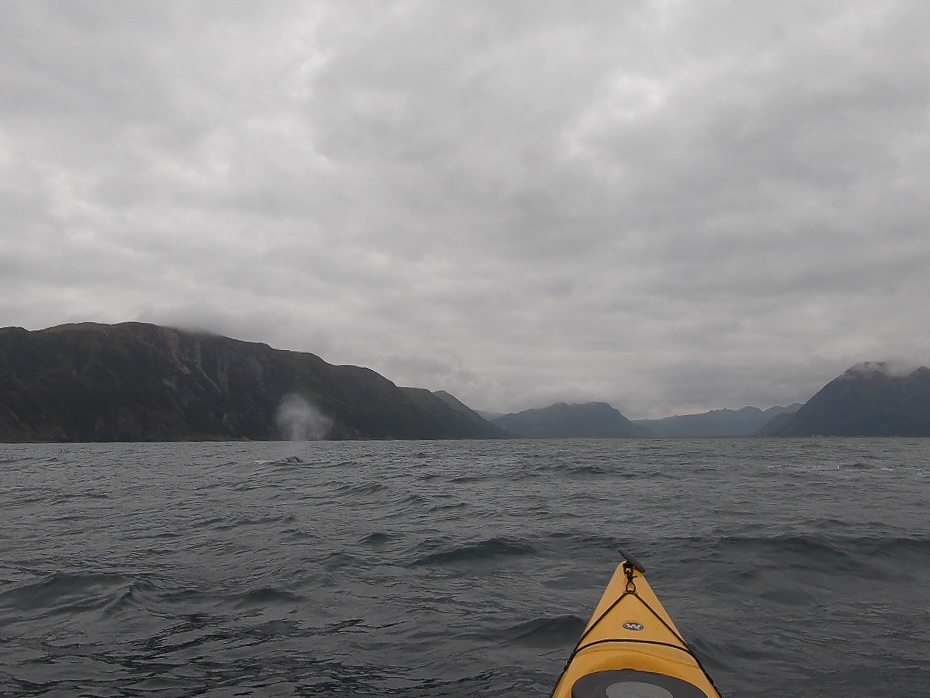
They were surfacing regularly, emerging in a flash of white water and sending a plume of spray and vapour into the air with an echoing blast as they rolled forward, already submerging their mottled grey heads again. Sometimes that was it, they just sank back beneath the waves. Other times they arched their scarred backs high out of the water, hinting at their huge size and revealing the knobbly ridge of their back, making us think they might lift their tail fluke clear of the water as they dived. They never did. By paddling from time to time against the wind and waves that pushed us back, we stayed with them, in awe of their size and marvelling at our good luck.

Gray whales aren’t known for the dramatic breaching or fin-slapping of humpback whales, the incredible size of blue whales nor the stealth and speed of the more streamlined rorqual whales. They’re awesome in their own way though, if you ask me. Their skin becomes more mottled as they age, lightened by barnacles past and present. Whale lice also hitch a lift, living amongst the barnacles. The only species of whale to feed on the seafloor, the side with fewer barnacles gives away if the whale’s left or right ‘handed’.
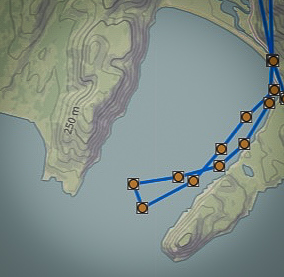
Just as my hands were beginning to complain about the cold, Jen checked her watch and announced that, after almost an hour with the whales, it was time to head back. Assisted by the wind this time, we paddled happily back to shore after the best trip I could have hoped for.

Massive thanks, Jen, for making this trip happen!
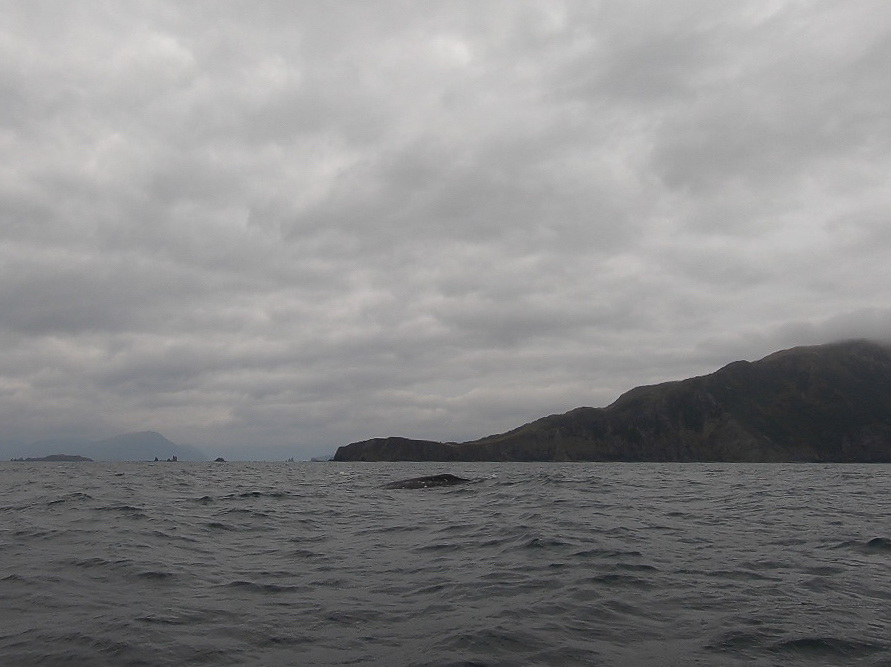
Thar she blows!

Seven miles beyond Pasagshak, Fossil Beach really is the end of the road if not the end of the world. Beside the road, a massive rusting corrall on a massive scale, with tree-trunk fence posts, must have been for the infamous Pasagshak buffalo. Opposite, the swings of a deserted play area swung in the breeze beside a small cabin with smashed windows.

Next, I passed an old rocket launch site with towering fences, signposts to ‘Area 4’ and an evacuation warning system. Eerie tall, windowless buildings stood incongruously against a background of pristine beaches, blue skies and brilliant sunshine. It all felt a bit Russian and I kept on pedalling.

Bald eagles patrolled the cloudless sky over Fossil Beach, where my fossil hunting was cut short by regular showers of rocks from the overhanging cliff above. Instead, I walked the kelp-strewn tide line, balanced on the sun-bleached tree trunks piled up at the back of the beach and ate M&Ms in the sunshine.

My goal was, of course, to find gray whales and I saw them almost immediately after crossing the headland from Pasagshak. Cresting the ridge after a brutally steep uphill struggle, I had excellent views across the bay. Within 10 seconds of stopping on the side of the road, the first blow — a bright white puff of spray — stood out against the sparkling blue sea. Within a couple of minutes, I’d seen clusters of blows from two other locations and counted at least six whales.

The whales were closer to shore by the time I cycled back from Fossil Beach and I stopped again to watch. This time I could make out the backs of the closest whales as they surfaced, with their barely-there dorsal fins and knuckly peduncles. They were still here and I’d seen them.

Beware the buffalo

After telling me how careful I needed to be camping at Buskin River, the shop assistant in Big Ray’s mentioned that my next stop, Pasagshak, was one of the least bear-y places on Kodiak Island. My spirits rose immeasurably.

“I’ve only seen one bear there in 30 years. There are wild horses and cows on the way, and the Highland cattle can be obnoxious,” he explained. “Oh, and you need to watch out for the buffalo.” Wait, what? “Sometimes I’d rather deal with a bear,” he added. Great.

The cycle out to Pasagshak was a slog. Exhausted after my night of bear terror, my bike was heavy with supplies and the hills felt endless. Strong gusts of wind hindered me no matter how much the road twisted and turned. Mike the friendly roadwork guy waved me over to talk bikes, offer me energy bars and share bear stories. Initially teasing me for having a bear bell jingling as I cycled, he grew serious when I said I’d just come from Buskin River. “That’s a bad, bad place for bears,” he repeated a couple of times. “You get 1000 lb bears there every day.”

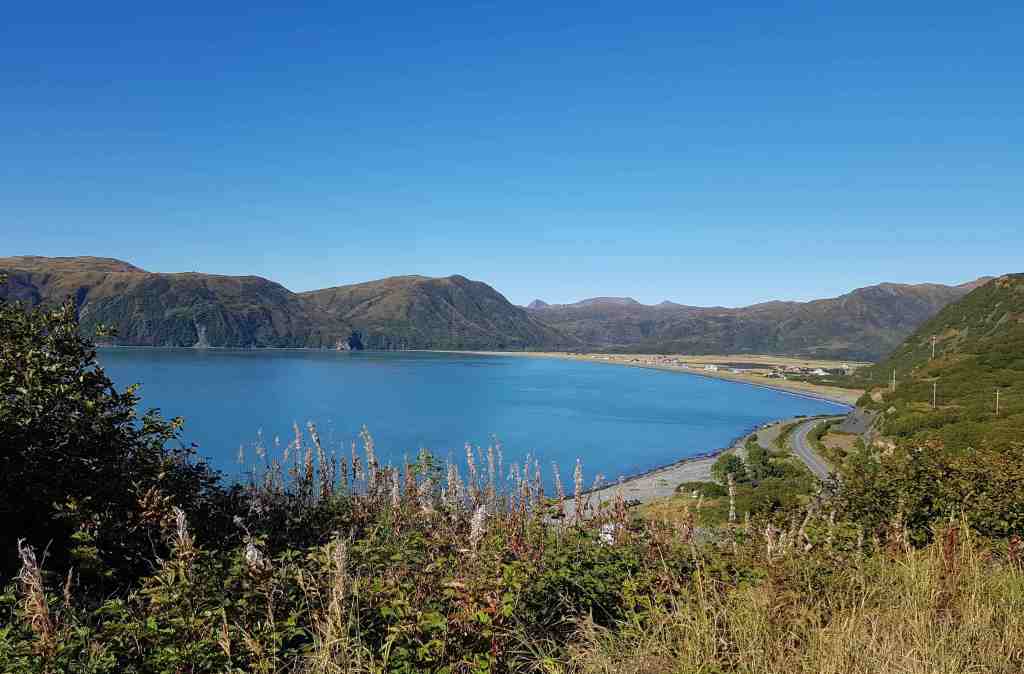
Many hours later, having taken nearly twice as long as Google had expected, I rolled into Pasagshak. A bay hemmed in by mountains, with a shingly beach and river mouth, Pasagshak is very nearly the end of the road. A small campsite, a few houses set back from the beach and a boat ramp, that’s about it.

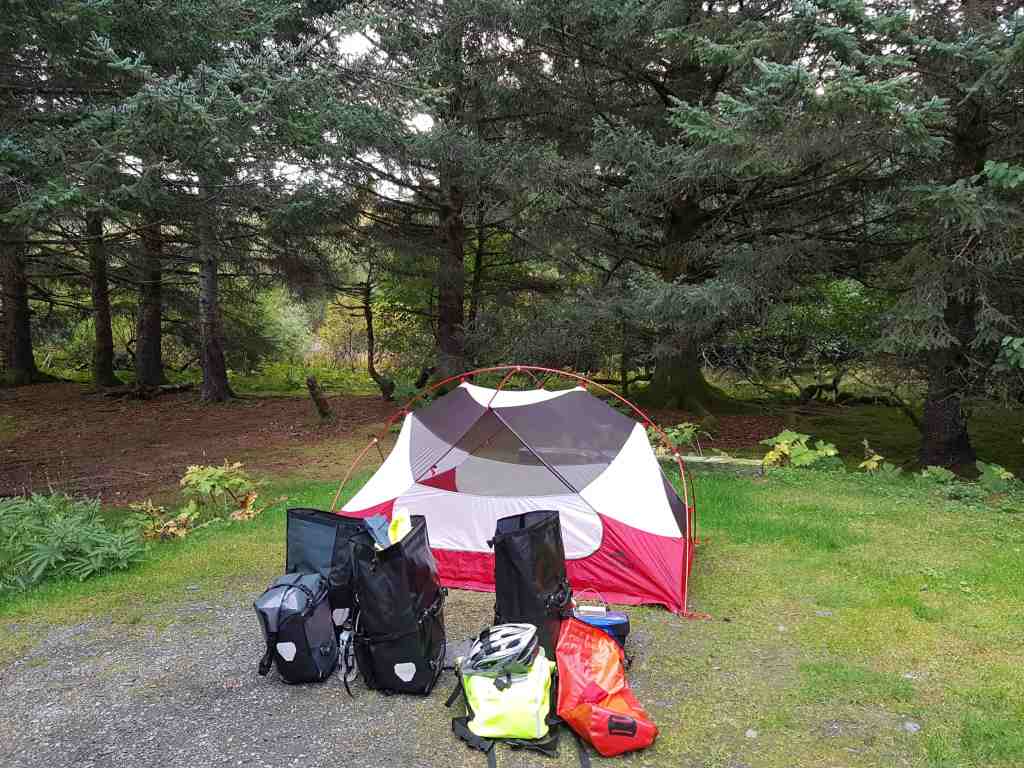
The campsite — more of a gravelly car park — was empty so I claimed the least rocky pitch as my own and battled to set up my tent in the blustery wind. Between the gusts that tore loudly at my tent and the surf that crashed onto the beach, a whole team of bears could have been tangoing around the campsite all night and I wouldn’t have known. Perfect. Now my main concern about getting up in the night was that my tent might blow away without my weight to anchor it.

I spent three happy days at Pasagshak exploring, testing Alaskan camping food, collecting water from a nearby stream and trying to befriend the ‘obnoxious cows’ that turned and fled each time I approached. Reggie, the campsite warden, told me of summer months when the whole bay fills with gray whales, and how they come to the shallows to rub on the rocks. Puzzled that I wasn’t fishing, he delivered some salmon he’d caught and smoked himself. It was delicious.

Had the weather not turned, it would have been difficult to leave this quiet bear-free haven. As it was, fierce winds brought relentless rain that made the return journey an uncomfortable one but the prospect of heated accommodation in Kodiak all the more tempting.

Local knowledge & spider senses

Just a mile from Kodiak airport and four miles from town, Buskin River Recreation Site was conveniently located for my first night of camping on Kodiak Island. Having reassembled my bike at the airport, I wheeled into the park.

I was hoping I could manage a night without bear spray, camping gas and matches, all things I couldn’t bring on the plane, and my plan was to see what other campers at Buskin River reckoned. Except there weren’t any other campers. The place was deserted and my spider senses were on high alert.

Plan B had me bursting into Big Ray’s outdoor store three minutes before they closed, having cycled into Kodiak at top speed. As the shop assistant directed me towards the bear spray, I asked if he thought I would survive a night in a tent at Buskin River. He didn’t laugh or even smile. After a pause, a list of rules followed: always have bear spray in your hand, with the safety catch off, and test fire it to know its range. There was no debating whether there were bears there, there were. But with the abundance of salmon in the river at the moment the bears were well fed and quite mellow. Massive but mellow.

Back at Buskin River, it was getting dark. I cycled a lap of the site, pinging my bell as I went. Some cars passed through but none stayed. Camping site selected, I quickly set up my tent. Bear canister (the bear-proof container my food lives in) and toiletries went into a bear locker about 70 metres from my camping spot. The bear spray stayed by my side. By the time the tent was set up it was pretty dark, just time for a sandwich then bed.

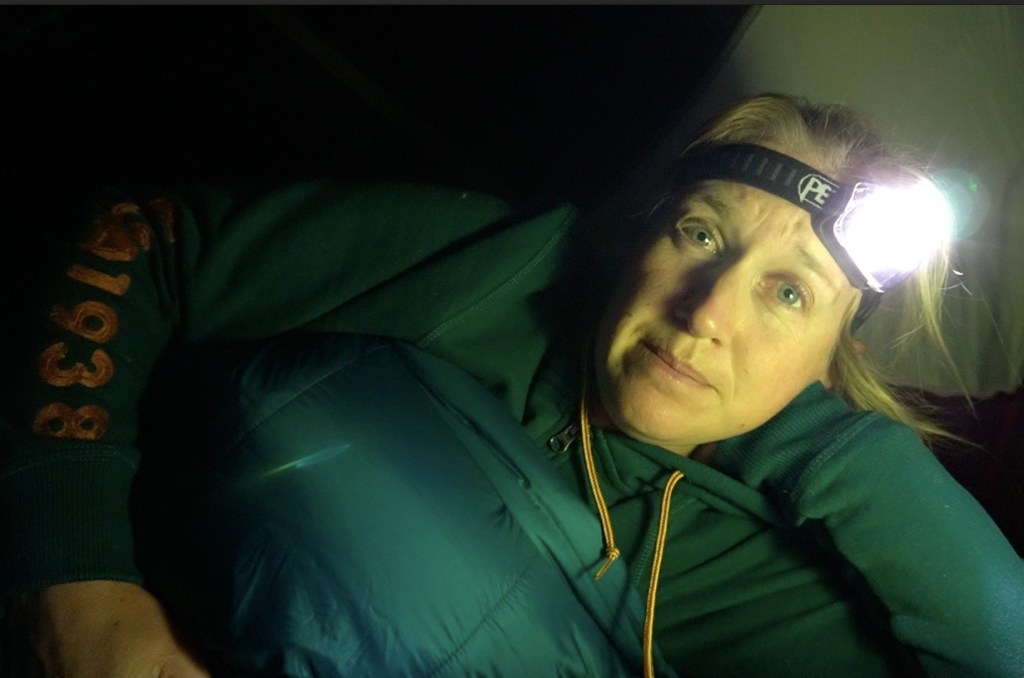
Not wanting to eat near my tent, I cycled towards an open area near the river. Cycling through a darker stand of trees the light of my head torch suddenly illuminated a huge pair of eyes directly ahead of me. They looked straight at me, bright and green, then moved smoothly sideways back into the trees. Screeching to a halt, I turned circle. The sandwich went back into the bear canister and I dived into my tent.

What followed was a night of terror. Noises in the darkness had me shouting at the trees, blasting my air horn and gripping the bear spray, putting way too much faith in a can of aerosol-propelled vegetable extract. Something — perhaps the wind, perhaps not — caused one of my tent’s porches to collapse, the fabric rustling in the wind. Those were slow, slow hours. My fear levels spiked during a pee expedition in the dark hours before dawn.

Unhappy face at 04:00

Daylight eventually crept through the trees. Jet engines roared from the airport and the national anthem played from somewhere. My bike was loaded in record time and it wasn’t until I reached the airport that I finally ate my sandwich.

Since then my friend, Lars, has asked how I can know how bear-y a place is. I’m sticking with local knowledge and my spider senses, but with more attention paid to my spider senses in future. I won’t be camping at Buskin River again.

Packing up in double quick time

Squirrels’ teeth & meteorites

Visiting the Alaska Heritage Museum was hands down the highlight of my stay in Anchorage. The single room on the ground floor of the Wells Fargo bank — inconspicuous and easily missed — houses a treasure trove of artefacts and is free to enjoy.

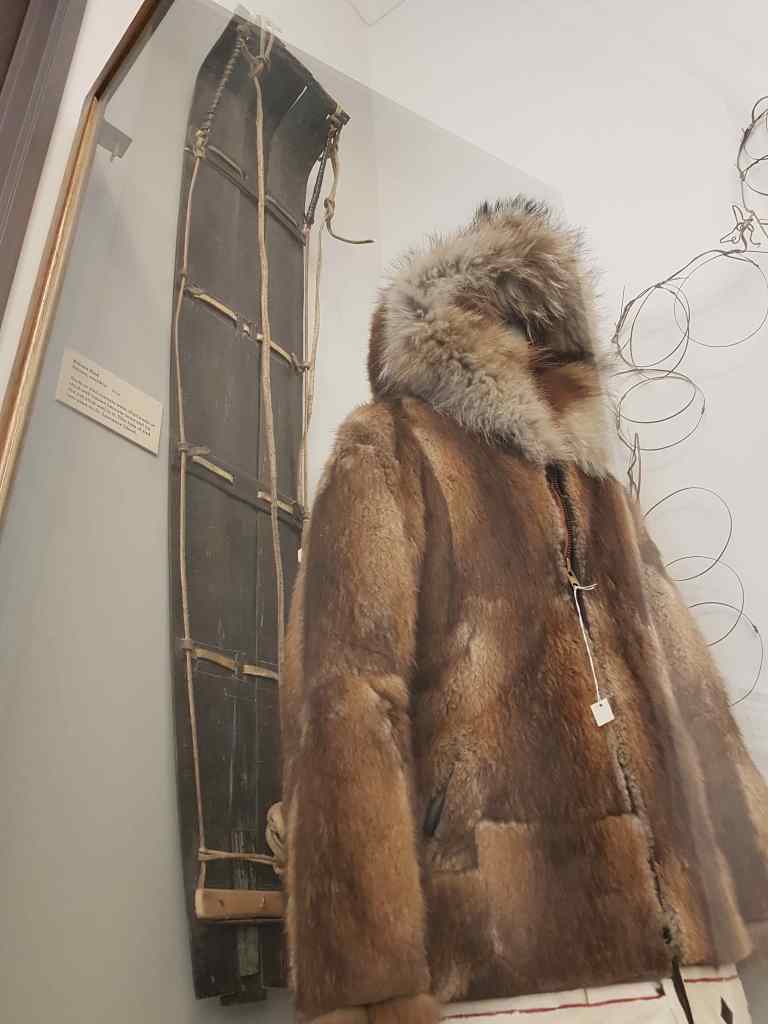
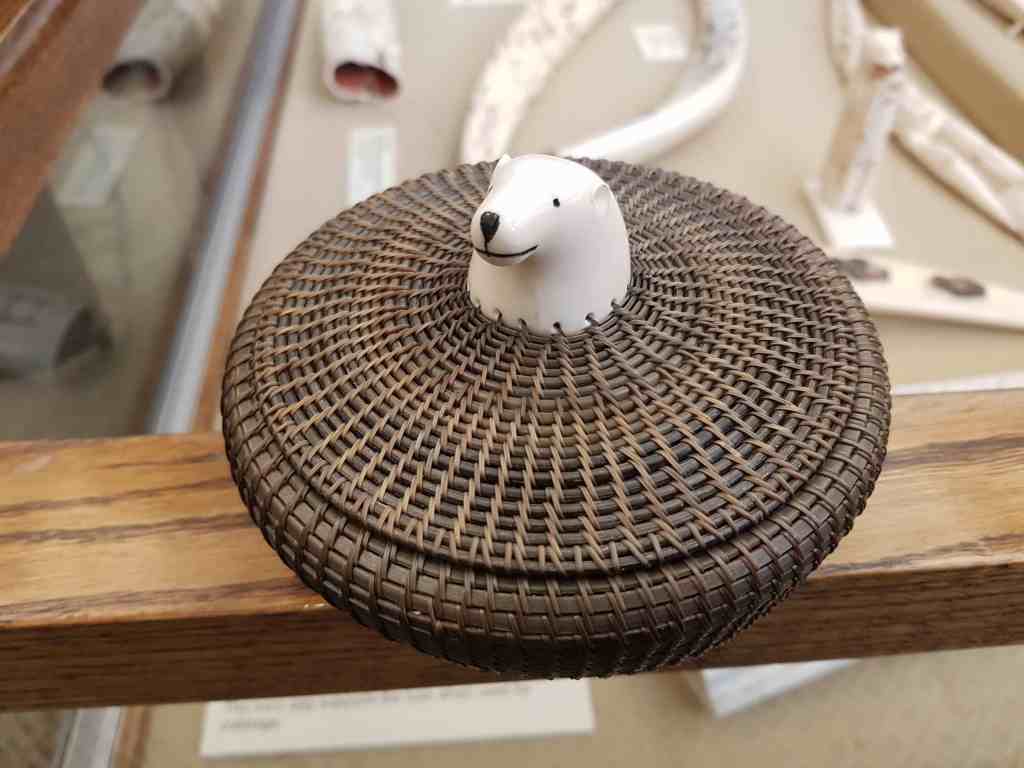
Models of umiak boats made from walrus or seal skin stretched over driftwood frames sat next to 1,000-year-old harpoon heads and blubber hooks. There were baleen buckets, baleen sledges and baleen baskets. Many of the baskets had carved ivory starter pieces shaped like the heads of marine mammals as they’re seen from a kayak. Woven from thin strips of baleen, the baskets were light as a feather and seriously robust.

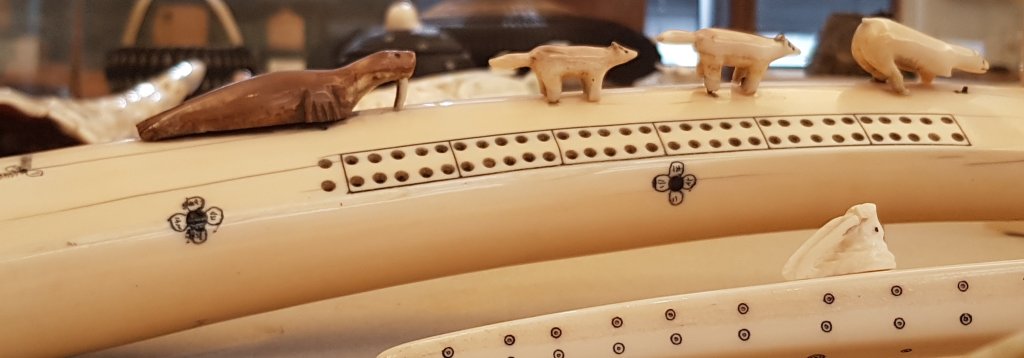
A collection of carved tusks caught my eye. Incredibly intricate maps, scenes and animals had been etched into the ivory, whilst others also had three-dimensional figures on pegs that slotted into holes in the tusk. The curator of the museum, clearly very knowledgeable and with a mischievous air, opened up the display so I could take a closer look. “The people would have traded metal tools for carving these designs”, he told me, “and they also collected metals from fallen meteors”. Really? “And, apparently, squirrels’ teeth are incredibly hard”, he added. Wait, what? If trying to find fallen meteorites seemed crazily unfeasible, what were the chances of happening upon squirrels’ teeth? It only occurred to me later that whole squirrels — teeth and all — are easier to locate, but I’m still not entirely convinced.

Bear aware!

“Nothing will guarantee your safety in bear country”. That was the opening line of the first article I read about how to behave in bear country, and it’s the gist of every other article I have read since then. Information gathering is usually my number one tool for overcoming worries. It hasn’t worked on this occasion.

They can charge at 44 mph, climb trees at top speed and smell food from miles away. Anything I can do, a bear can do better. 

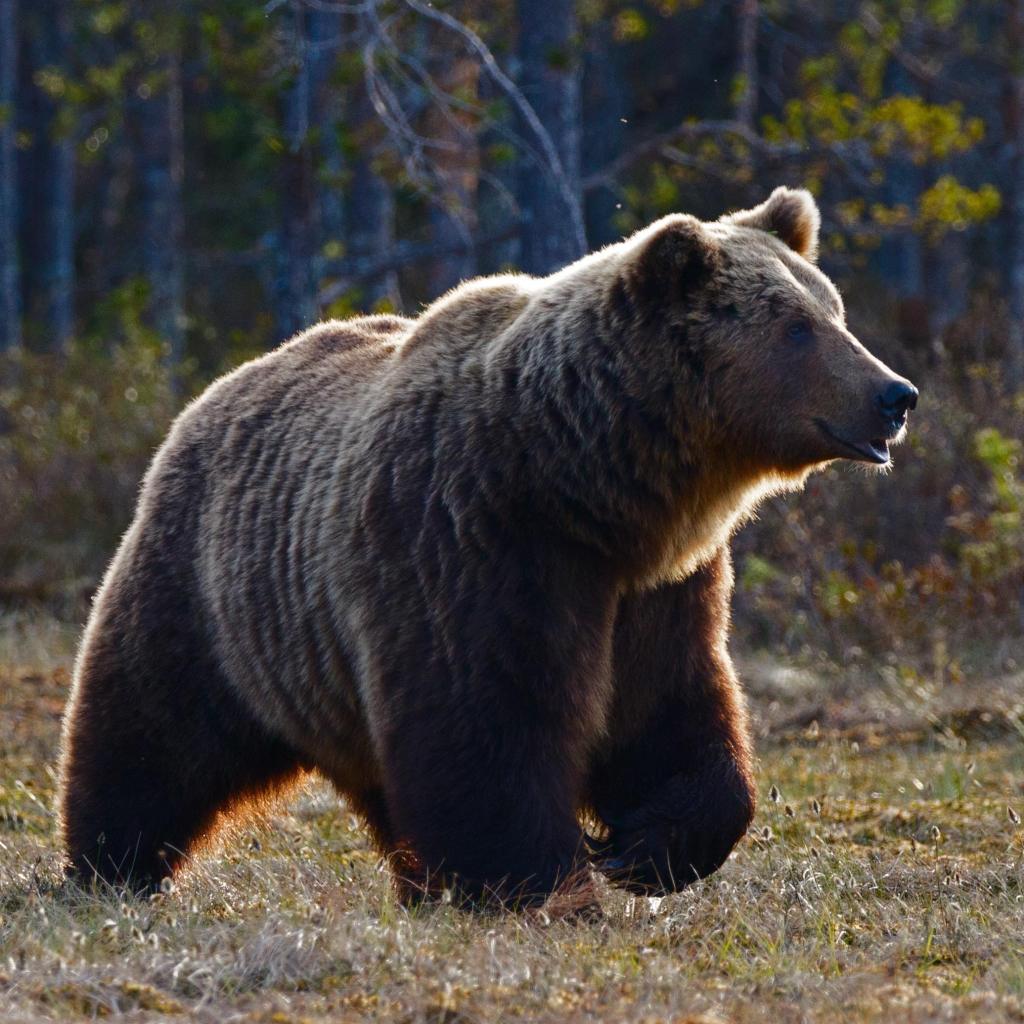
And, I need to know my grizzlies from my black bears because they play by different rules. If a black bear approaches my camp, I’m meant to shout, bang pots together and wave my arms around, perhaps lob some rocks at it. A grizzly, however, should be spoken to calmly as I avoid eye contact and back away slowly. Never try to move a grizzly bear. 

Avoiding close encounters is the way forward and there are lots of things I can do to help with this. I’ll be storing all my food, toiletries and rubbish in a special bear-resistant canister. There’ll be no cooking or eating anywhere near my tent, that’ll happen downwind and far away. Only nice open spaces will be considered for camping spots and, when on the move, I’ll be making plenty of noise. No bear surprises, please.

I have only seen a bear once, a fleeting glimpse of a black bear in Big Bend National Park, Texas. A persistent snuffling noise emanating from a bush beside the path got my spider senses tingling. Then a bear poked his head out, looked around and vanished back into the bush. Fingers crossed any future bear encounters are of a similar nature — brief and peaceful.

Orkney on wheels

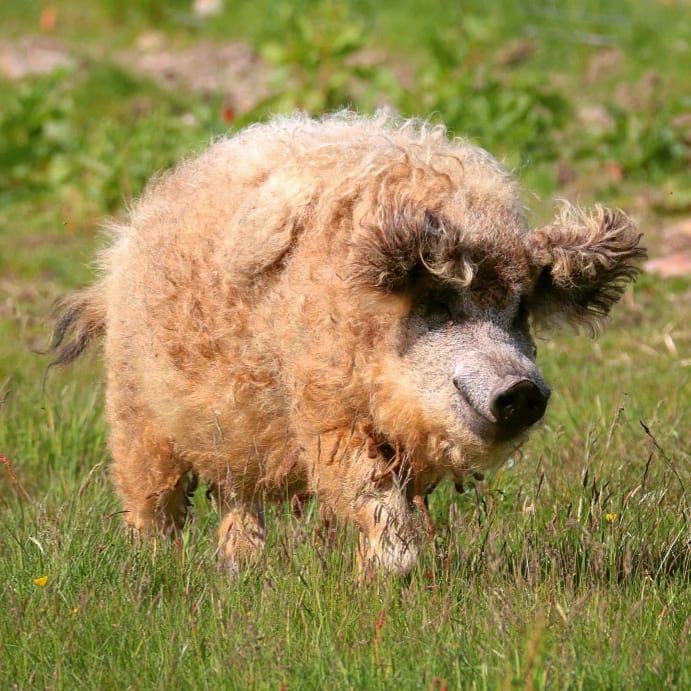
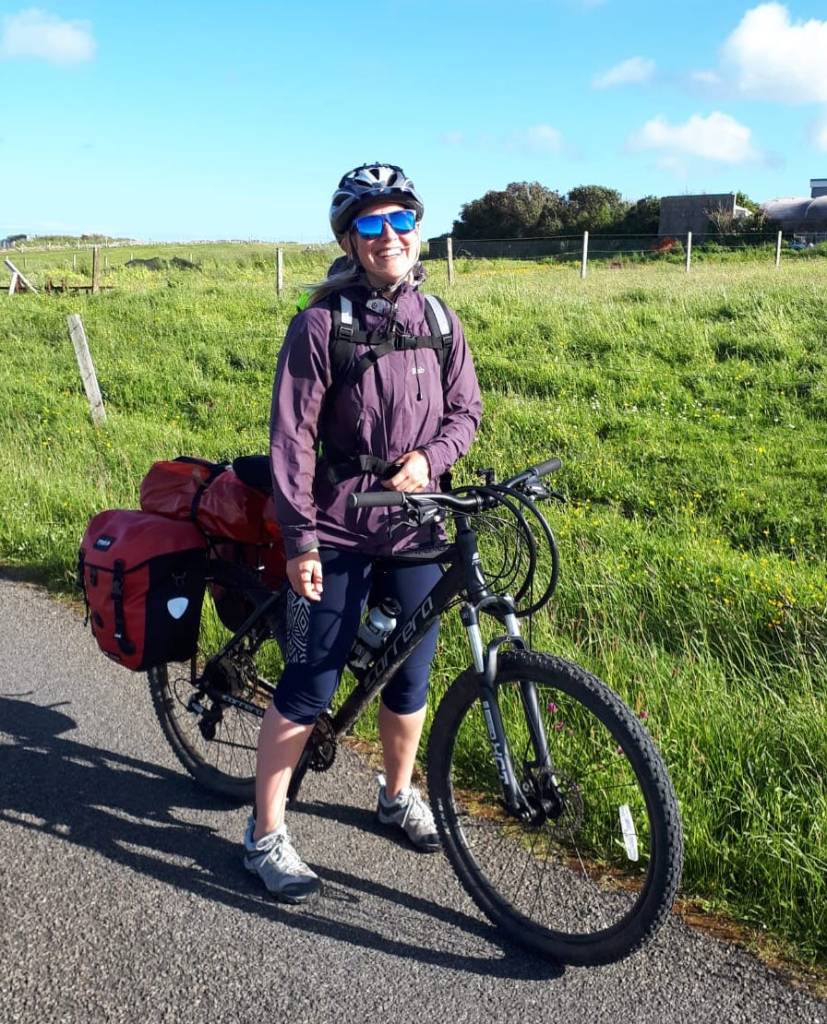
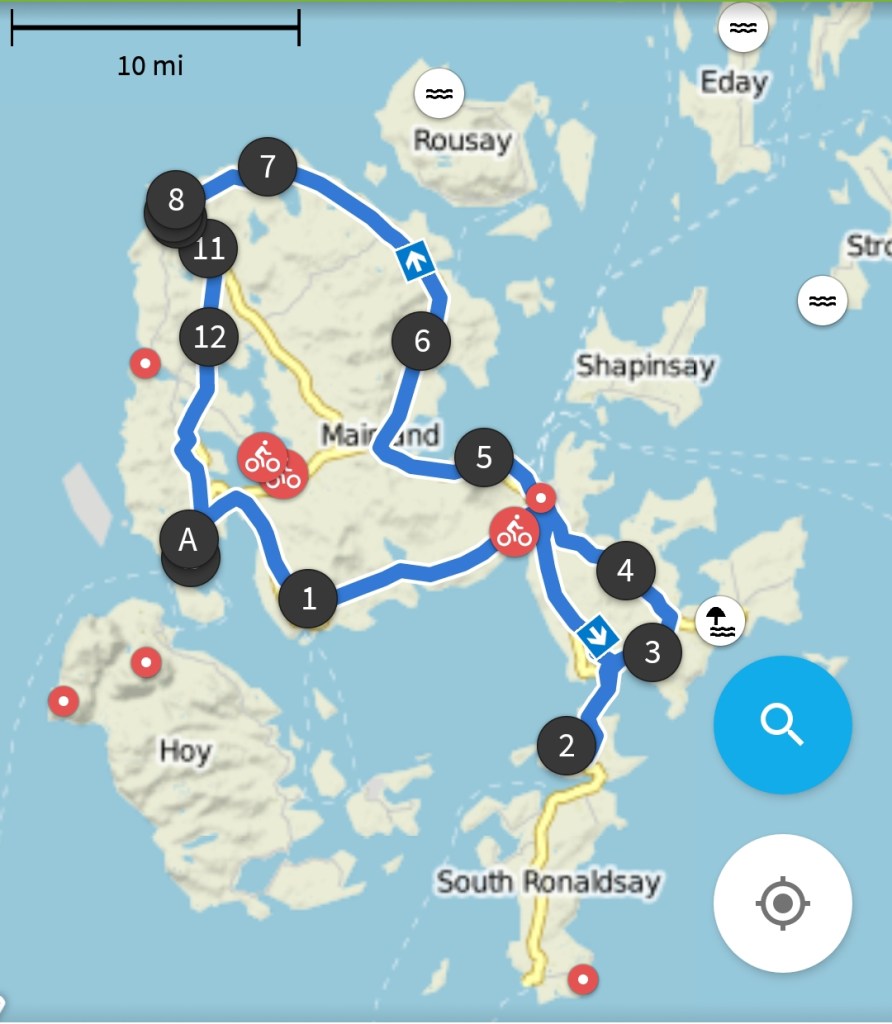
The whistling call of curlews mixed with the shrill peeps of oystercatchers and acrobatic lapwings entertained with me their erratic flight as I cycled between wind-ruffled fields. Most impressive were two curly-haired Hungarian sheep pigs who trotted over to see me, hairy ears flapping enthusiastically (theirs, not mine). Wanting to dust off my panniers and stretch my legs, I had cycled off the ferry in Stromness that afternoon and was on my way to visit my excellent friend, Moni. The weather moves quickly in Orkney and by the time I arrived, 28 miles later, I had experienced brilliant sunshine, buffeting winds and stinging rain.

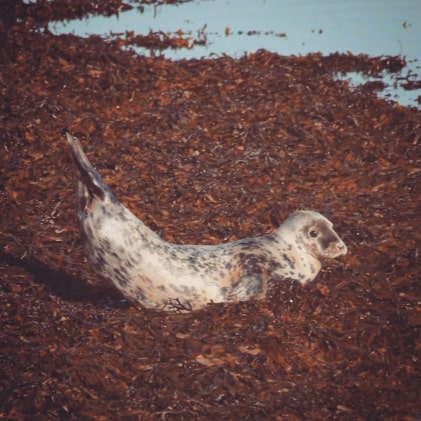
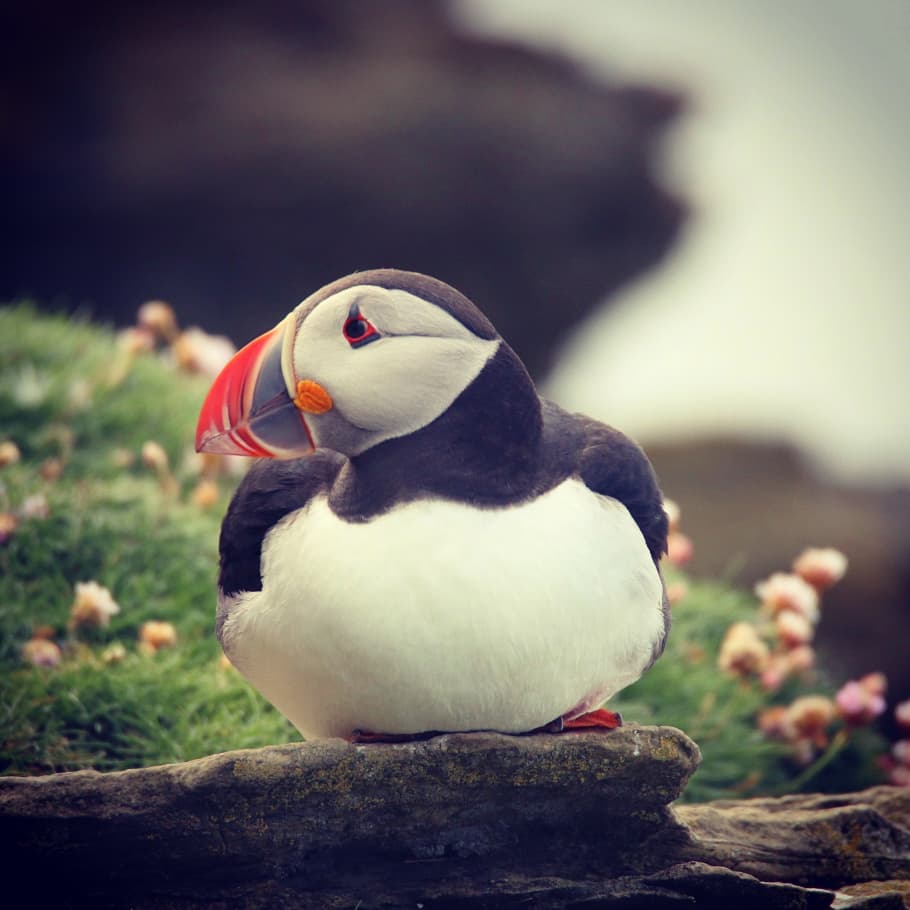
Saturday was a wildlife frenzy as Moni showed me the sights. Starting early, we quietly crept up on the local harbour seals: basking adults snoozed, pups swam in the shallows and a defensive mother saw off a grey seal with a short but convincing charge. Terns nesting on a nearby beach shrieked at our approach as their chicks scurried around in the dunes, then we were off to the Brough of Birsay in time to cross the causeway in search of more seabirds. Puffins, guillemots and razorbills lined the ledges, fulmars cruised over the cliff tops and shags stretched out their drying wings on the rocks below. A seal surfacing in the wash below us was our only marine mammal sighting of the afternoon, no killer whales for us.

Despite an excellent forecast, light rain pattered against the windows as I repacked my panniers on Sunday morning. I was taking the scenic route back to Stromness via the north coast to complete my lap of mainland Orkney. The slow slog to Kirkwall gave me time to reflect on the rumour of Orkney being flat. 

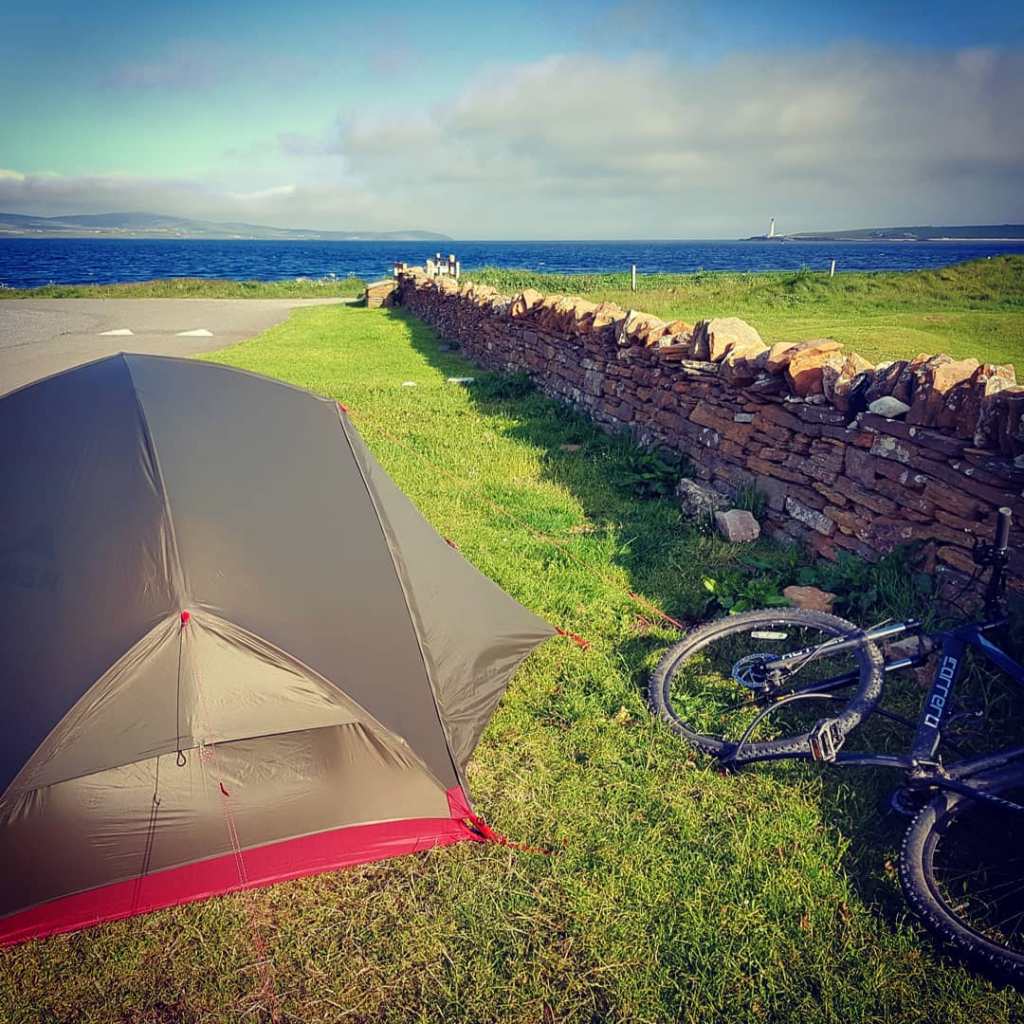
Brighter weather and easier miles followed after that, along with a welcome lunch stop near Tingwall and an excellent cake break in Birsay. One more hour of cycling and I was rattling over the narrow cobbled streets of Stromness to a busy campsite beyond the harbour. I celebrated my 55-mile day with a warm rum and coke in the evening sun as I rehydrated some spicy noodles and listened to the hum of fishing boats heading home. With clouds approaching and the wind picking up, I retreated to my sleeping bag and was asleep by 9pm after a brilliant mini-adventure in Orkney.

Tent-tastic

During The Gray Whale Cycle, I will mostly be camping and I could not be more excited, I love camping. Until recently I had two tents: my trusty stormproof North Ridge tent (like North Face, but not) and an ultra-lightweight Nordisk one. Unfortunately, neither tent seemed right for the job.

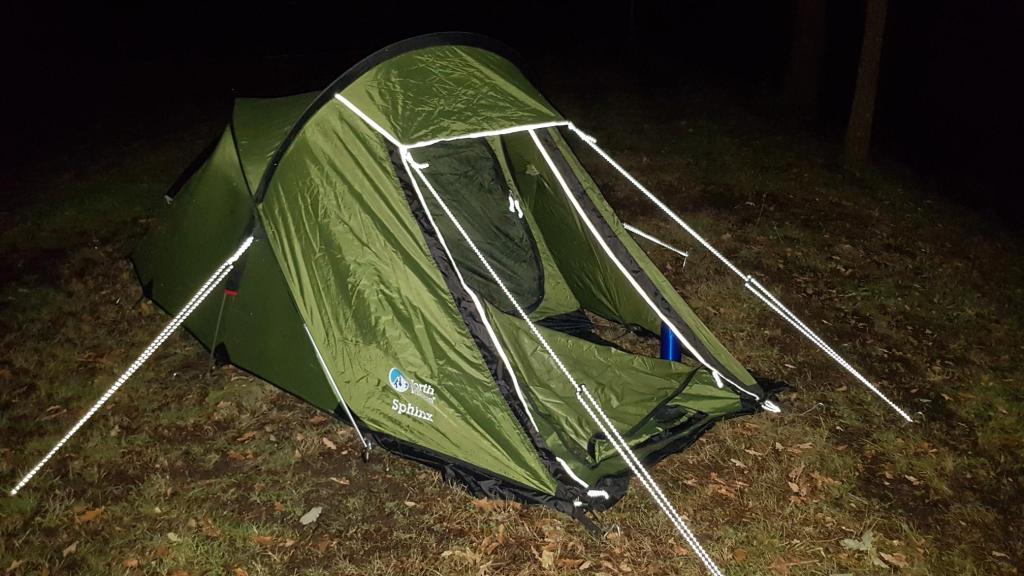
My North Ridge tent is pretty much indestructible and I’m very much hoping we’ll grow old together. It’s kept me snug in howling gales on an exposed headland on the Isle of Skye, incessant rain in Yorkshire and plenty in between. Its strength comes at a price though, it’s heavy and bulky and, sadly, is just too big to lug all the way from Alaska to Mexico. 

My Nordisk Telemark tent, on the other hand, packs down nice and small and is as light as a feather. It’s also a minuscule canvas coffin that barely accommodates me, let alone any of my ‘stuff’. Perhaps I’ve never mastered pitching it correctly but its one pole gave up on a breezy night in Skye (different trip, Skye’s a windy place!) and heavy dew can spell disaster. It’s just not adventure-ready. Its future more likely involves Ebay. 

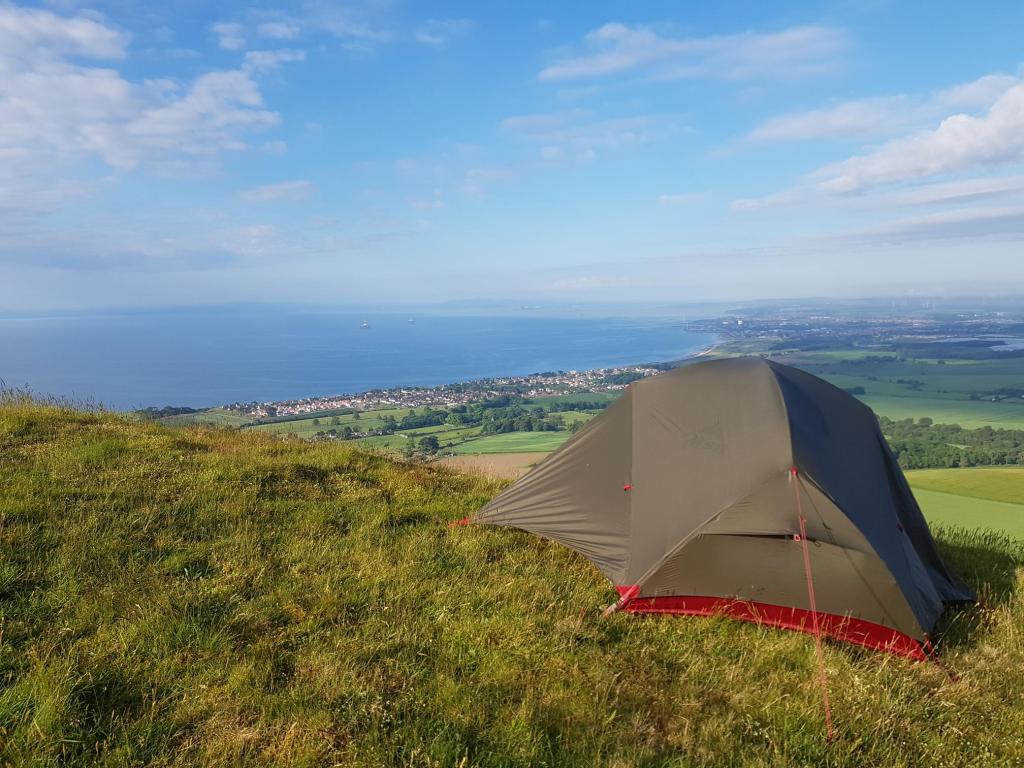
After reading most of the internet, quizzing friends, borrowing tents (thanks Jon!) and visiting shops to stroke and prod their products, I settled on a winner. Over budget but bursting with promise, I went for an MSR Hubba Hubba NX. It has glowing reviews and even came with a free hip flask, what more can I say?

It arrived on a blustery Fife day and we immediately headed to the nearest hilltop. It passed that test with flying colours and, so far, I love it. It’s light (1.9 kg with the footprint), packs down to a manageable size, and is easy enough to put up and take down. It’s yet to be tested in heavy rain but I’m feeling optimistic. This could be the start of a beautiful friendship.

Miles and medals

Running across Scotland from east to west was a huge success. Whilst the wildlife sightings were distinctly underwhelming (no golden eagles, no red squirrels and only a small herd of apologetic deer on the penultimate day), the scenery was fantastic. Winding our way up the rough track at the head of Glen Affric before bounding and whooping our way down the other side, with the waterfalls and streams tumbling off the Kintail mountains now flowing alongside us for the first time, was the absolute highlight. Not even 22 miles of incessant rain and an ice-cream headache inducing wind could dampen our spirits after that and we hobbled across the bridge to the Isle of Skye already planning future runs.

Whether it was the run across Scotland that helped get me through London marathon or the incredible atmosphere and cheering crowds, that was another day to remember. A punchy mix of bone-rattling bass from countless bands and speakers, bowls of jelly babies and slices of orange, smiles and shouts of encouragement from strangers, and the determination of all those runners who made it to the start line, never mind the finish. With survival my only goal, I soaked up the atmosphere and took it on the chin when a rhino overtook me in the final mile. Within 24 hours of finishing — with so many muscles still groaning and my running shoes sticky with Lucozade — I entered the ballot for the 2020 Virgin London marathon. Fingers crossed!

A practice run

Really I should be cycling. Cycling from Alaska to Mexico will hurt less if I train more now. However, I have a couple of marathons coming up — London in April and Edinburgh in May — and I want them to hurt as little as possible too. As part of my training, I am travelling to Inverness this weekend to attempt to run coast to coast across Scotland. That’ll be from Inverness to the Isle of Skye, approximately 86 miles over five days. Some will be over fairly friendly terrain, alongside Loch Ness for example, while other sections will be remote and more gruelling.

Elements of the trip will undoubtedly parallel The Gray Whale Cycle: getting up each day with a destination to reach and only myself to make it happen, watching the scenery evolve as I progress, documenting and sharing my journey as I go, cursing headwinds and, hopefully, having a sense of achievement when I reach my goal. Whilst I’m not convinced that running fitness equates to cycling fitness, I’m excited to consider this a practice run.